Small business advertising can feel overwhelming and the advice differs depending on who you ask. Here’s what we recommend!
- How much should small businesses really spend on marketing?
- How important is marketing and advertising to small businesses?
- Can a business survive without advertising?
- How necessary is advertising, really?
These common questions all have the same basic answer:
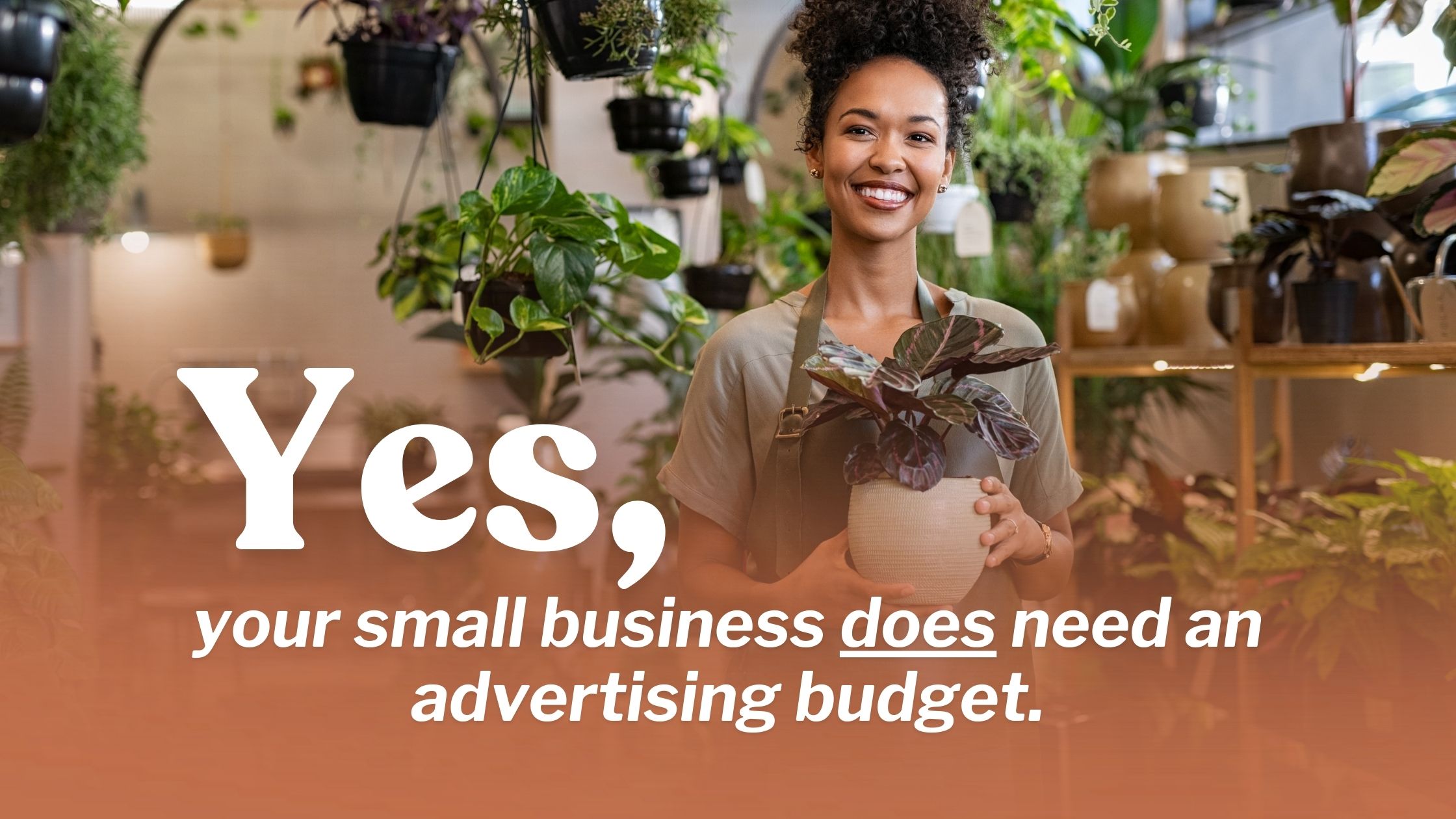
Yes, your small business needs an advertising budget.

Even with a loyal customer base, you should always be expanding your customer reach into your local area. When customers move, their circumstances change, or they choose another business, you’ve got to fill their spot on the “regular roster”.
When business slows, many small biz owners chop the advertising budget, which can be an accidental disaster. Small businesses want more customers, more sales, and more visibility, but when the budget for outreach goes away, things can get tough. You lose your share of voice in our crowded market and it can take months to build back the exposure.
Great business exposure does not happen by accident. An intentional advertising budget turns finding new customers from guesswork into strategy. Without advertising dollars, spending becomes reactive and success (or Return on Investment/ROI) becomes hard to measure.
With an advertising budget based on your small business needs, you can focus on goals, deploy dollars wisely, and build a business that survives the ever-changing rollercoaster of running small business in the USA.
Experts Recommend Investing 5-10% of Revenue In Advertising
Experts generally recommend businesses invest around 5 to 10% of revenue in marketing, depending on growth stage and industry.(hawksem.com) Startups or competitive local categories often spend more because the objective is market saturation and building their brand.
Advertising is the fuel that creates demand – it allows you to be “known before you’re needed” – both attracting active shoppers and being remembered in the future. Without advertising, competitors and large businesses with a budget fill the space and capture the customers you could have earned.

How to Build a Smart & Realistic Advertising Budget
1. Define Your Business Objective (That is Trackable)
Start by defining what you want to accomplish. More foot traffic. More calls. Online sales. Brand awareness. Lead form fill-outs. When you know what the ultimate object is, you can focus your dollars and track what is or is not working.
2. Spend Realistically
Use a percentage of revenue to set your baseline. A common guideline for small businesses with less than $5M in revenue is 7–8% of gross revenue, especially if growth is a priority.(anbfc.bank)
If your business generates $500,000 every year, you should aim to spend around $3,300 per month on all of your advertising (totaling $39,6000 a year). For Manning Media customers, that typically looks like a mix of radio ads, in-person community events, and digital ads.
These are just guidelines, as established brands with steady demand may spend less and aggressive growth companies may spend more.
3. Know Your Customers and Their Habits
Know who you want to reach and where they spend time. Mass-reach media such as local radio is powerful for creating awareness and demand in the exact areas you serve, and where people can walk in. Digital channels like Facebook ads, emails, and creative banner ads allow for precision targeting the right demographics of people ready to commit. Both can work together to move someone from just learning about your business to booking with you!
4. Build an Advertising Mix with Radio as the Foundation
For most local businesses, a strong advertising plan includes:
- Radio advertising for mass reach and branding yourself to be known in the areas you serve
- Digital advertising for targeting your ideal customer based on income, habits, and interests
- Website and landing pages that inform and call people to book/buy online
- Email or CRM for nurturing leads and increasing repeat business
Radio remains one of the most efficient ways to build consistent brand awareness in a local market with the power of sound, story, and HUGE audiences. It reaches customers during drive times, workweeks, and errands – when they’re thinking about fixing the problems you solve. Smart campaigns use radio to generate demand, then use digital to close the deal.
5. Break Your Ad Budget Into Categories
Organize spending into buckets such as:
- Radio schedules that share your unique value and offerings
- Streaming audio and podcasts where you can share your expertise
- Paid social and search that captures phone calls and clicks to your website
- Creative production for audio and visual platforms
- Promotions or offers like birthday campaigns or 1st time customer incentives
- In-person community building events like grand openings, anniversaries, and super sales
This breakdown keeps budgets transparent and aligned with goals.
6. Tracking Success and Knowing When to Pivot
Advertising is not just spending. It is investing. It allows you to see what is working, what is not, and where you should be focusing your advertising. You can track key outcomes such as:
- New leads generated
- Website traffic growth
- Store walk-in visits
- Call volume
- Coupon or offer uses
- Branded search lift analytics
Radio and digital attribution can work together. For example, a strong radio schedule often increases branded Google searches and web traffic during the campaign flight. When people visit your website, search for you, or visit your social media pages, that is is a real signal of demand creation.
7. Monitor, Measure, and Adjust
A good advertising budget is not static – you cannot steer a parked car. Plan on reviewing your advertising efforts quarterly or even monthly. Shift money toward channels that are performing well – focus on what works! Reduce or test alternatives where performance lags, such as changing the creative of your radio ad or using new designs for social media. Add small experimental buckets for new ideas so your brand does not stagnate. Keep your core messages the same, but give your audience something new to think about.
The Radio + Digital Combo Always Wins
Every small business needs an advertising budget because it drives visibility, demand, and long-term sales. A smart plan blends broad-reach media like radio with targeted digital tactics to convert interest into revenue. With a smart advertising budget and plan, you can help keep up with new customers, keep your loyal customers coming back, and win the small business game.
For business owners in Maryland, West Virginia, Virginia, and Pennsylvania – you can trust Manning Media to build an advertising plan that matches your goals and helps you stay on top: